How Affluent Homeowners Use AI to Shortlist Remodelers (and How to Make the List)
By Ian Cantle · November 11, 2026 · 6 min read
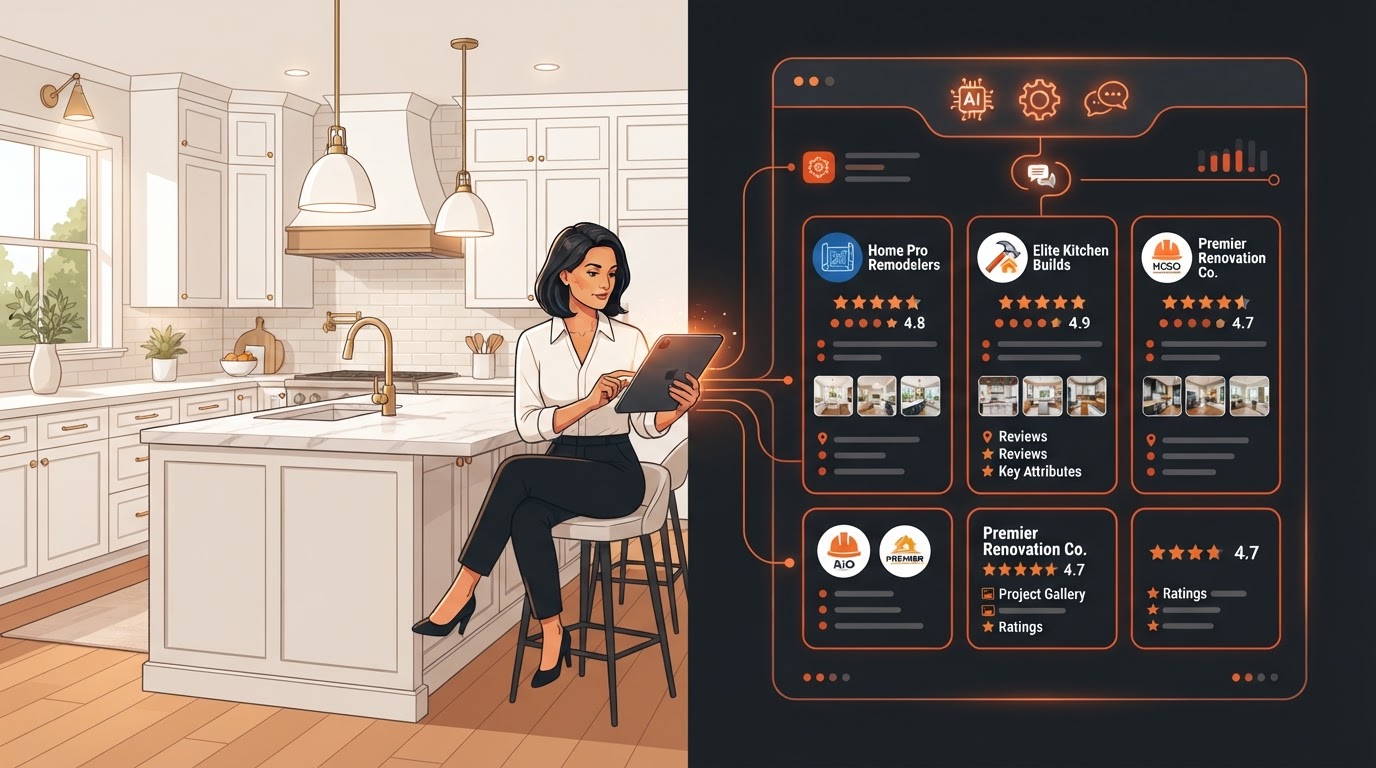
Homeowners planning a major renovation increasingly ask AI tools like ChatGPT, Gemini and Google's AI Overviews to suggest and compare remodelers. Those tools name firms they clearly understand and see vouched for: consistent business information, detailed project pages, specific reviews and third-party authority. Remodelers who build those signals are far more likely to make the shortlist.
A homeowner planning a six-figure renovation used to start with a Google search and a page of blue links. More and more, they start with a question instead: "Who are the best design-build remodelers near me for a whole-home renovation?" And they ask it to an AI assistant.
The answer they get is short. A handful of firms, a sentence or two about each, and a reason to call. If your firm isn't in that answer, you may not make the shortlist at all, no matter how good your work is.
Here's how that shortlist gets built, and what premium remodelers can do to be on it.
How do homeowners use AI to research remodelers?
Most homeowners don't replace Google with AI. They add AI to their research. A typical path looks like this:

They search for the project, ask an AI tool to suggest or compare firms, read reviews, study portfolios and then contact two or three firms. AI shows up in the middle of that process, right where the shortlist forms.
That matters because AI answers are narrow. A search results page shows ten firms; an AI answer might name three.
How do AI tools decide which remodelers to recommend?
AI tools can only recommend firms they understand and trust. They piece that together from what's published about you across the web. Four signals matter most:
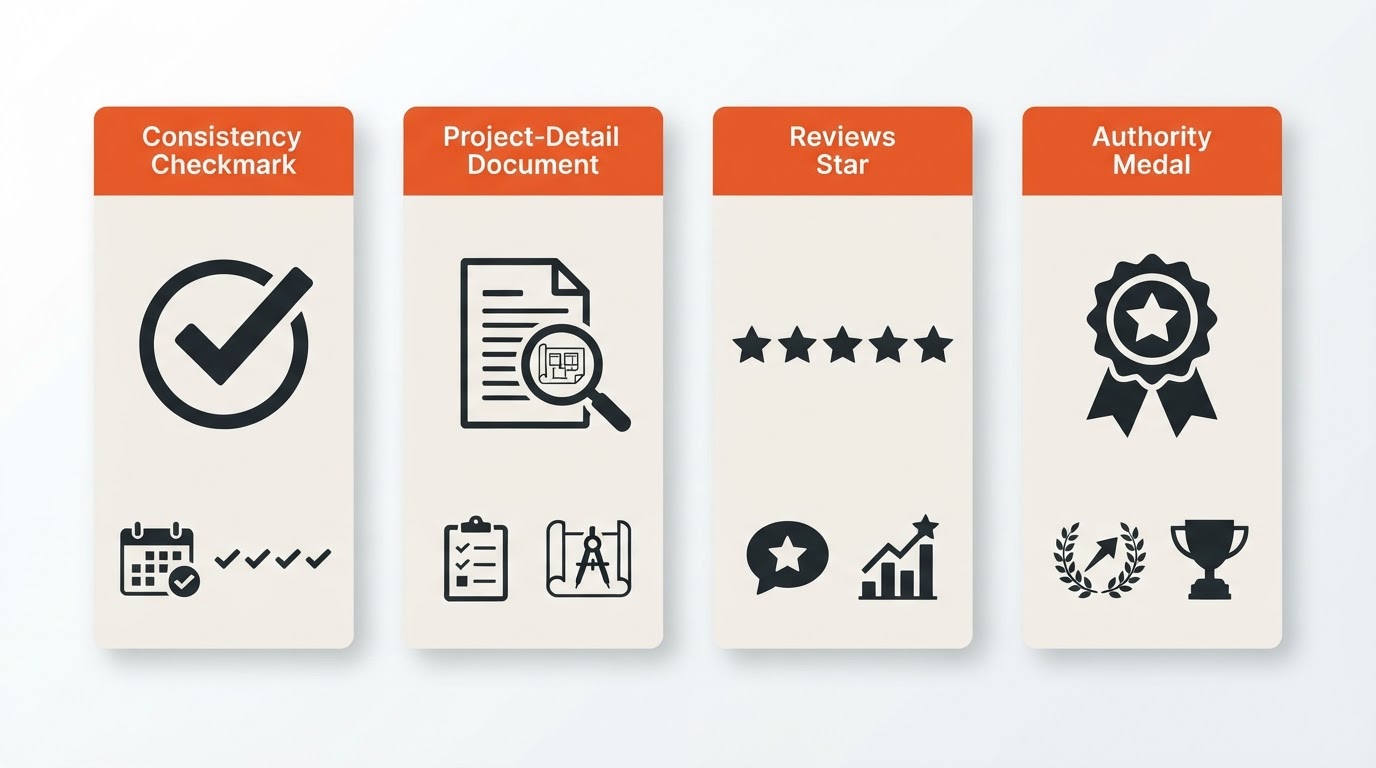
- Consistency. Your firm name, services and service area should match everywhere: your website, Google Business Profile and directories. Mixed signals make AI less confident.
- Project detail. Photo galleries alone give AI nothing to read. Project pages that describe the scope, location, materials and outcome do.
- Reviews. Specific reviews that mention the type of project and the experience carry far more weight than "Great job!"
- Authority. Awards, press coverage, association memberships and listings on trusted sites show that others vouch for you.
Why do AI tools describe so many remodelers the same way?
Without clear signals, AI tools summarize. They fall back on the most generic description they can find, and premium firms end up described like everyone else: "a local contractor offering kitchen and bath remodeling."
That's the real risk for a high-end remodeler. It isn't only about being named; it's about being described accurately. If your design-build process, craftsmanship and specialty aren't written down clearly and consistently, AI can't repeat them.
What can premium remodelers do to make the shortlist?
Start with the foundations, then build authority over time:
- Make your information consistent. Audit your Google Business Profile and directory listings so your name, services and service area match your website exactly.
- Publish a page for each project type you want more of. Kitchens, additions, whole-home renovations: each deserves its own page that explains your approach.
- Turn your portfolio into project pages. For each featured project, describe the scope, location, the problem you solved and the result.
- Add schema markup. Structured data tells search engines and AI tools exactly who you are, what you do and where.
- Earn detailed reviews. Ask at the right moment, and gently prompt clients to mention the project type and what the experience was like.
- Build third-party authority. Awards, local press, association listings and features on trusted sites all help.
None of this is a trick. It's the same work that makes your firm easier for a homeowner to understand, done in a way machines can read too.
What do homeowners actually ask AI about remodelers?
The questions are specific, and they often include budget, style or location. For example:
- "Who are the best design-build firms for a whole-home renovation in [city]?"
- "Which kitchen remodelers in [area] do high-end custom work?"
- "What should I look for when hiring a remodeler for a historic home?"
- "Compare [your firm] and [a competitor] for a second-storey addition."
Each of those questions is a chance to be named, or left out. The firms that show up tend to have published clear answers to the same questions on their own sites: what they specialize in, where they work, the kinds of homes they work on and what the process looks like.
What should a remodeling project page include?
A strong project page gives both homeowners and AI tools something specific to understand and repeat:
- The project type and location, such as "Second-storey addition in [neighbourhood]".
- The starting point: what the homeowners wanted and what wasn't working.
- The scope: rooms, structural changes, materials and design decisions.
- The challenge you solved, such as matching original trim or working around an occupied home.
- The outcome, in the homeowner's words where you have permission to quote them.
- Photos with descriptive captions and alt text, not just a gallery.
What keeps remodelers out of AI answers?
A few common gaps make it harder for AI tools to recommend a firm:
- Inconsistent business details, such as an old address or a different business name on some listings.
- A single "Services" page that lists everything in one paragraph.
- Portfolio galleries with no words, so there's nothing to understand or quote.
- Generic reviews, or very few recent ones.
- No mentions anywhere else, so nothing outside your own site vouches for you.
How do you know if AI tools are recommending your firm?
Checking ChatGPT yourself once isn't a reliable test. Answers vary by question, wording, location and platform. A better approach is to test a set of real homeowner questions across several AI tools, compare how often you're named against competitors, and re-test monthly.
That's the core of our AI search optimization service for remodelers. It builds on strong SEO for remodelers and a steady review and reputation strategy.
Where should you start?
If you only do one thing this month, make your business information consistent everywhere and write a proper page for the project type you most want to win. Those two steps help Google, AI tools and homeowners at the same time.
For the bigger picture of how search, reviews, your website and follow-up fit together, read our guide to marketing for remodelers. Or book a Profit Pipeline Review, and we'll talk through how visible your firm is today and where the gaps are.
Related insights
Frequently asked questions
Do homeowners really use ChatGPT to find a remodeler?
Increasingly, yes. AI assistants are becoming a common research step for major home projects, especially for comparing firms and building a shortlist before calling anyone.
How does ChatGPT decide which remodelers to recommend?
AI tools draw on what they can find and trust across the web: consistent business information, detailed pages about your work, reviews and mentions on other credible sites. Firms with clear, consistent and well-supported information are easier for them to recommend.
Can I pay to be recommended by AI tools?
No. AI answers aren't ads. You earn recommendations by making your firm easy to understand and well vouched for online.
Is AI search optimization different from SEO?
They overlap. SEO helps you rank in Google's results; AI search optimization, sometimes called GEO, helps AI tools understand and name your firm in their answers. Strong SEO foundations make AI visibility easier.
How long does it take to show up in AI answers?
Fixes like consistent listings and schema can help within weeks. Reviews and third-party authority build over months, so it's worth starting early and tracking progress monthly.
Is your marketing bringing in the projects you actually want?
Start with a practical review of your visibility, lead quality, follow-up and pipeline.
25 minutes. No obligation. We only use your details to follow up about your review.